Team Project - Live Client Brief
Journey to the Upright Rainbow
A live client brief given by MOTAT. Our goal was to enhance their Upright Rainbow exhibition through design and visual storytelling. Our group approached this through a interactive projector.
Project Details
Problem Statement
“How might we create an engaging and interactive experience for Gen Alpha around the Upright Rainbow sculpture that powerfully tells the story of Kupe’s voyage?”
Team Members
- Jason Lin
- Brayden Inger
- Loveday Tan
- Evan Huang
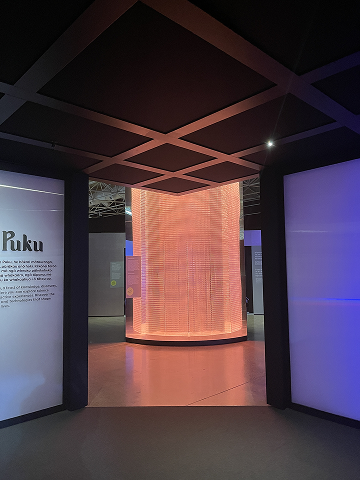
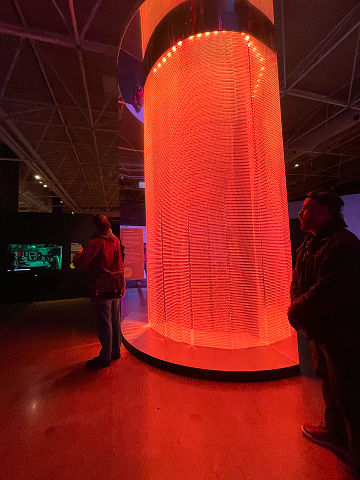
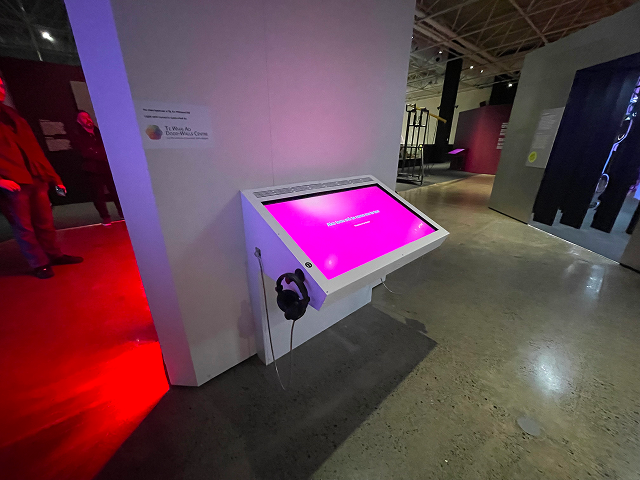
The Upright Rainbow: First Exhibition visitors see upon entrance to Te Puku, MOTAT’s science space.
With our brief of enhancing the Upright Rainbow exhibition through using design and visual storytelling to tell the story of Kupe and his discovery of Aotearoa through signs. Our team thought an interactive projector would be a fun and educational solution with our target audience being children.
Our approach was to have the interactive projector on the Upright Rainbow itself, specifically the back of the exhibition. We noticed that children are quickly captivated by the exhibition, looking all around it before quickly wandering off. With the installation of a interactive projector, we thought it would be perfect solution to enhancing the exhibition.
Our outcome with the interactive projector came out to be a point and click adventure for children. The children are encouraged to help Kupe tap through seven signs with each sign being a colour of the rainbow. Once all the signs have been found the activity is complete.
User Flow
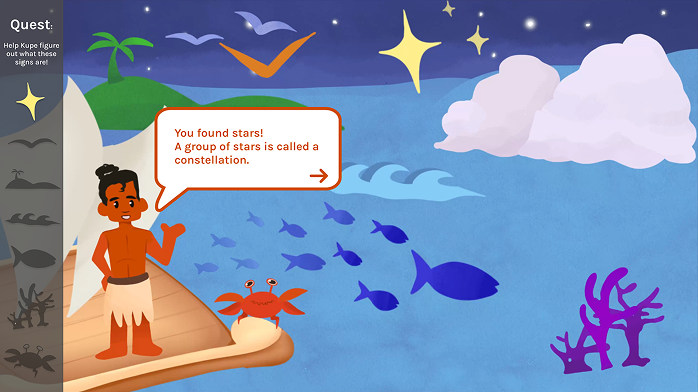
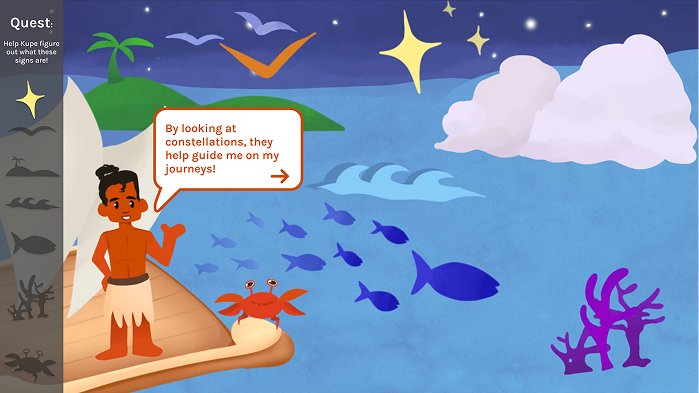
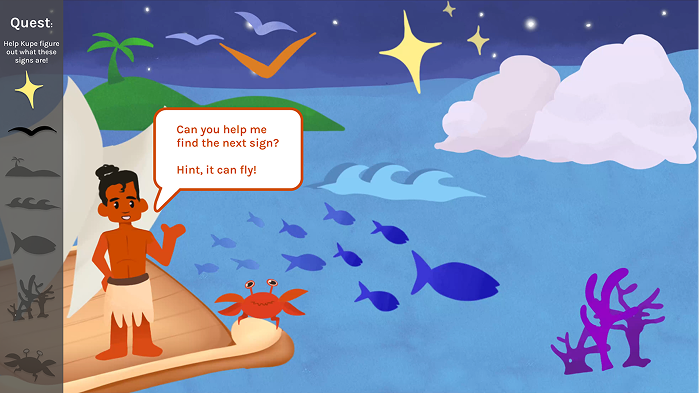
For the user flow, these are Figma Prototype photos to provide a clearer look
at the flow.
The activity starts with Kupe encouraging the user to help him find
and tap one of the signs.
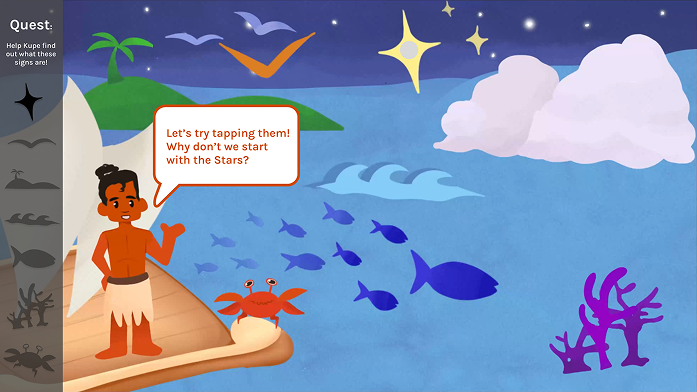
When tapping the correct sign, Kupe will congratulate the user and provide some educational information.
More information is provided about how these signs can help navigators like Kupe navigate the seas.
After all dialogue is read, the user is encouraged to find the next sign. This then repeats for each sign until the user has found the very last sign.
The Process
AI Assisted Coding
OpenCV, Python and MediaPipe
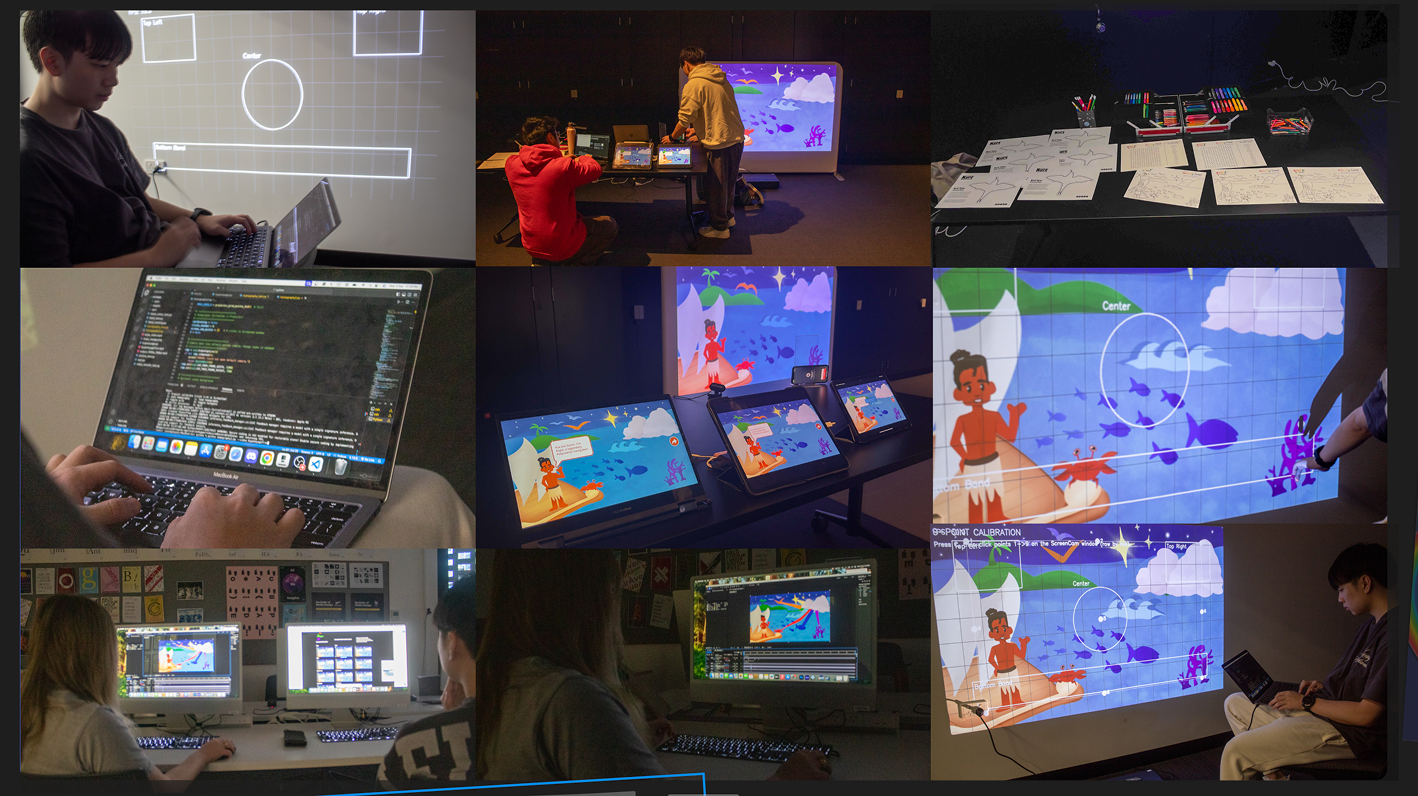
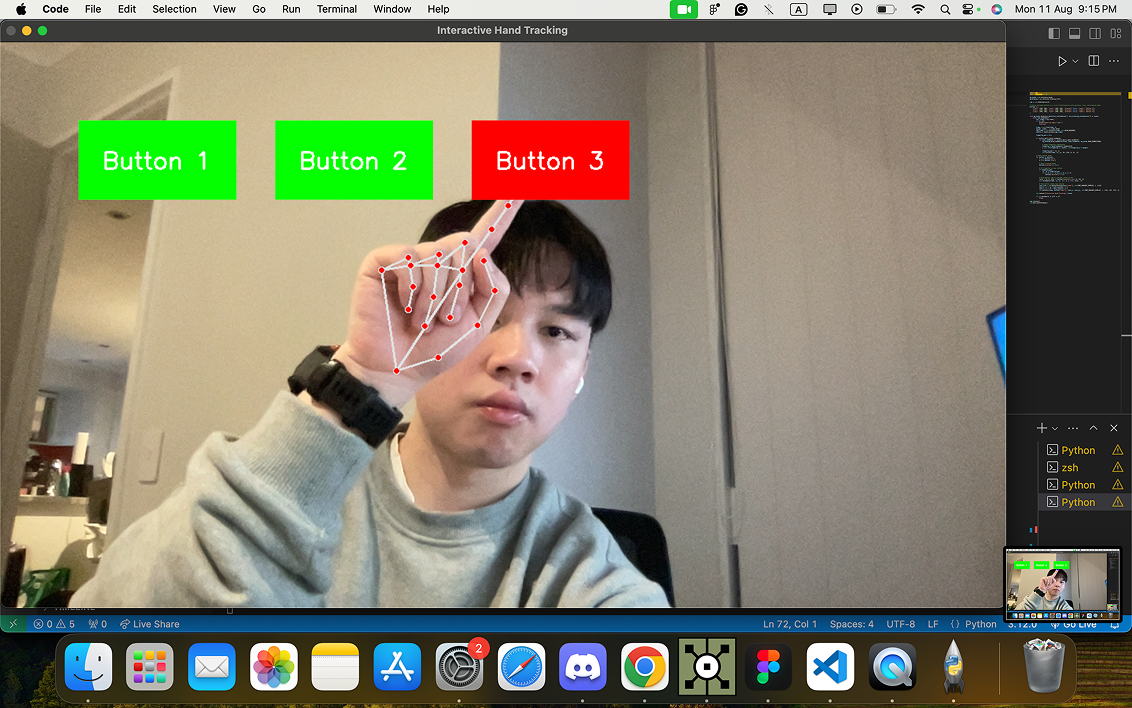
With the help of AI to get OpenCV, Python and MediaPipe working, I was able to get computer vision running. Through a computer and phone’s camera, it was able to detect the position of hands and create interactions when the hands meet a certain position. This would be the foundation for the interactions behind the projector.
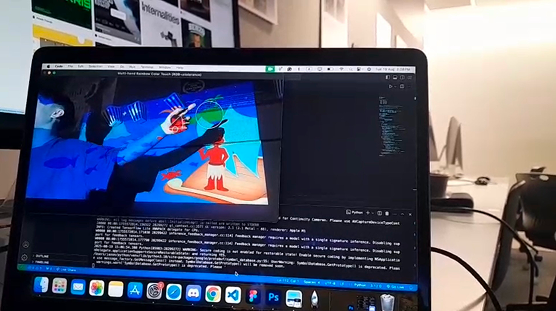
Interactive Projector Code
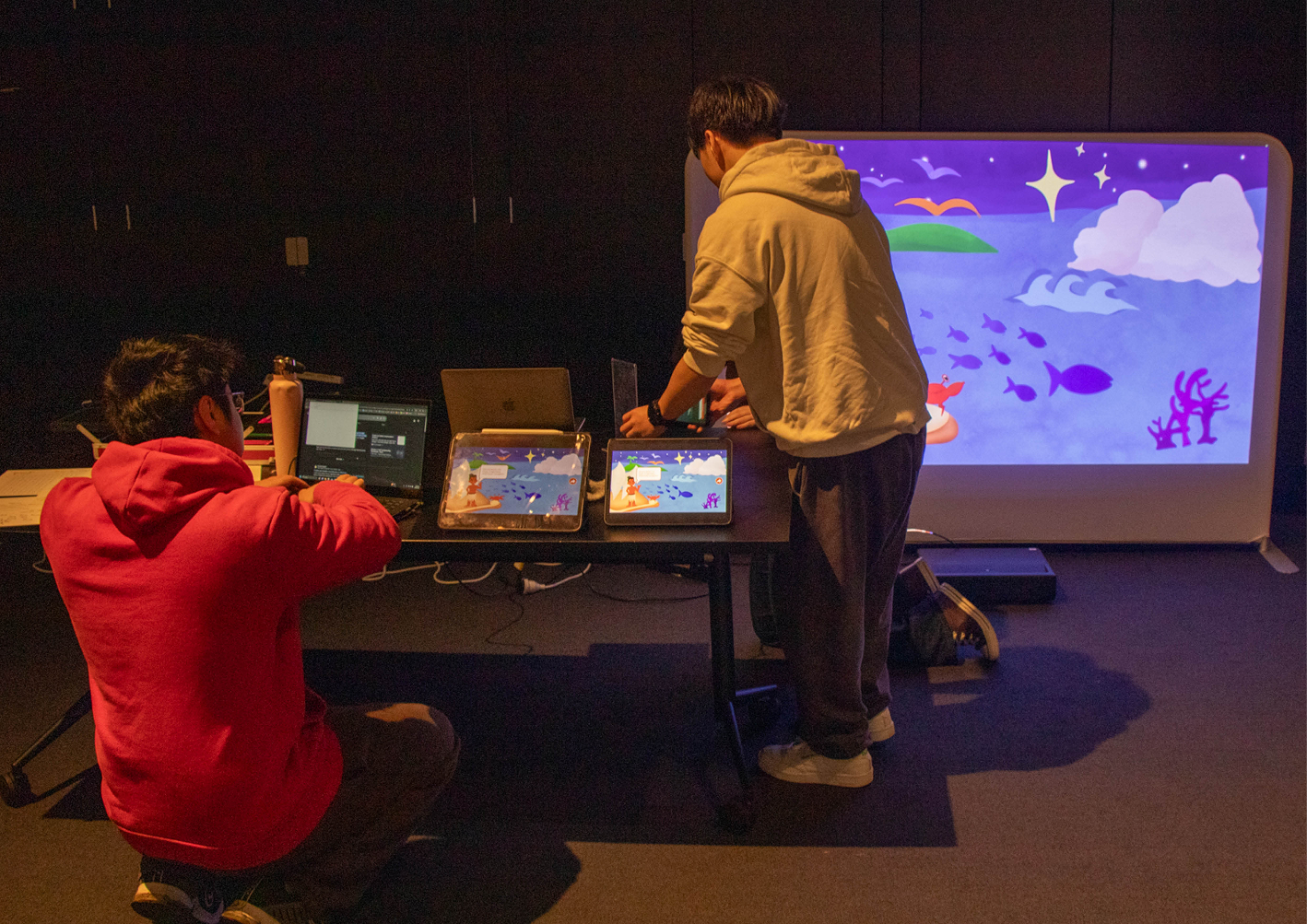
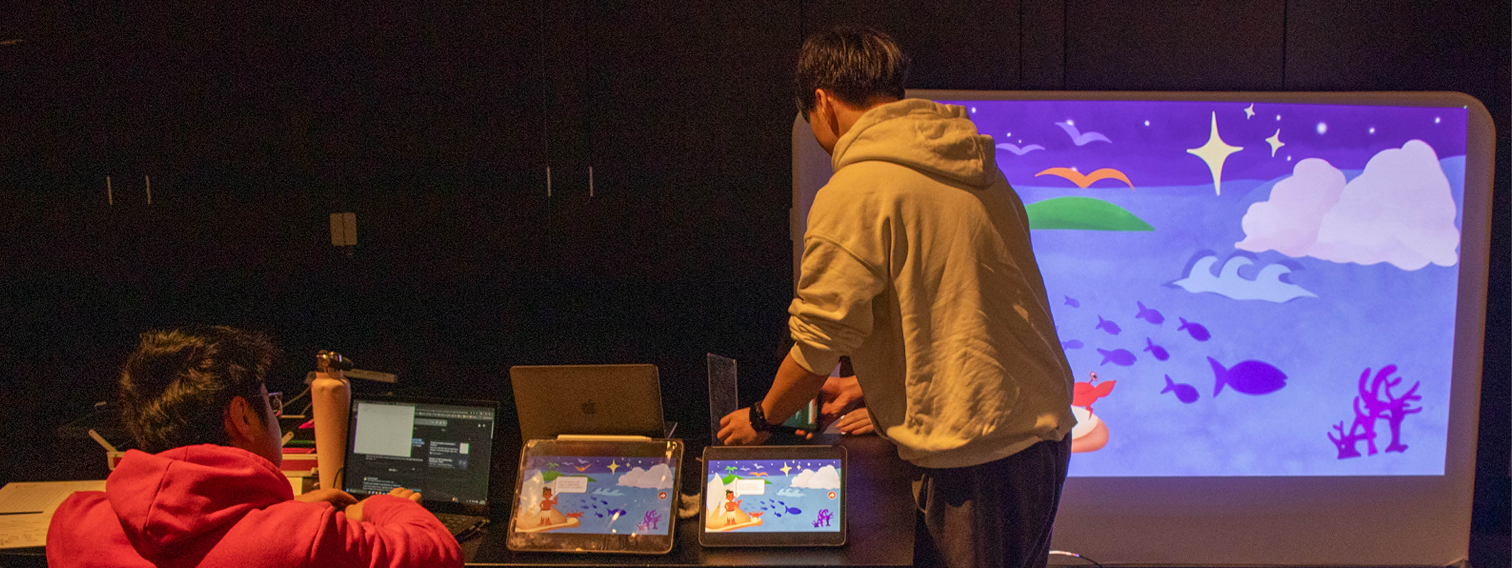
My laptop was reponsible for the running the code and handling the camera feed for interactions.
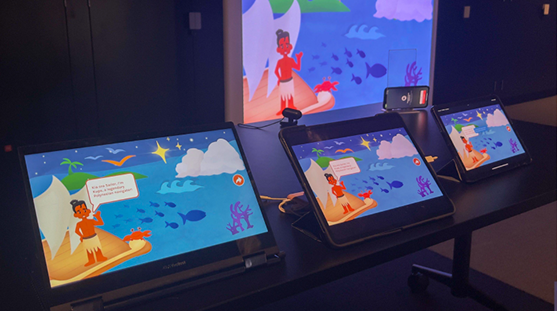
The Camera Setup
Camera feed was provided by my phone through Apple's Continuity Camera feature.
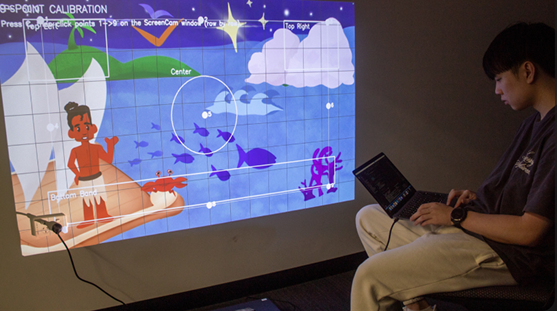
Homography Matrix
Homography Matrix was used to help specify locations where a interaction would occur.
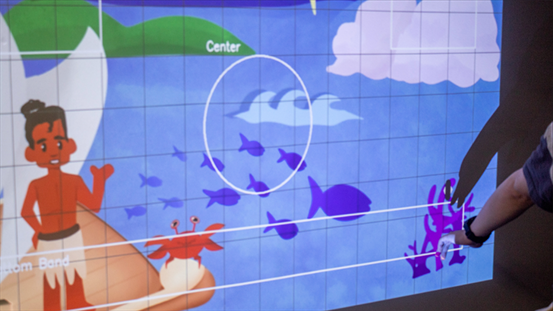
Short Throw Projector
Shadows were a issue early on, as a result we ended up using a short throw projector to alleviate this.
The Outcome
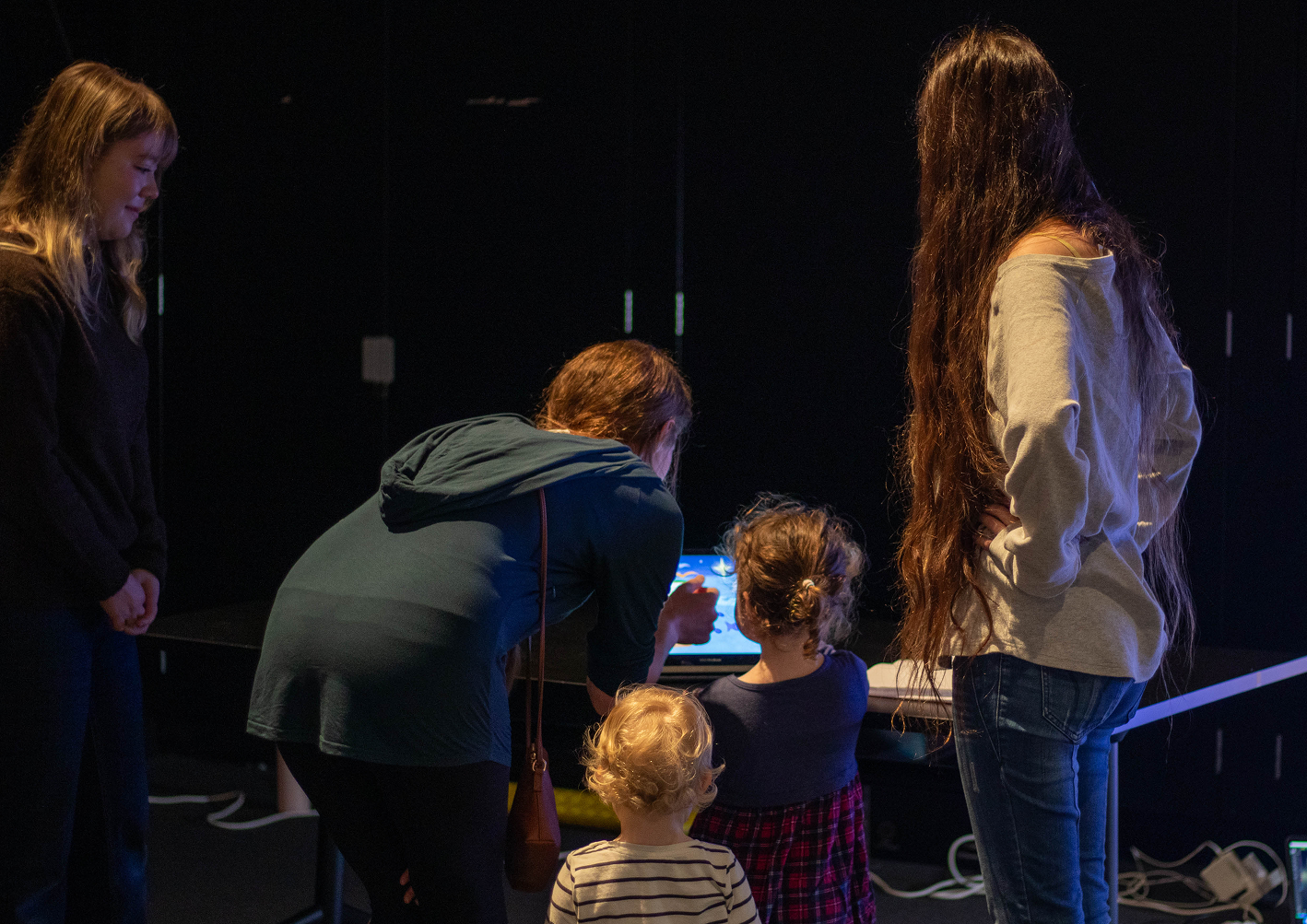
Fortunately, our team along with others working on this brief were given the opportunity to test our design solutions in MOTAT’s Te Puku space. During that time, we received positive feedback from MOTAT’s staff, but also the visitors of MOTAT.
With this project, me and my team hoped this would’ve improved the Upright Rainbow exhibition. Helping the visitors of MOTAT understand the significance and story behind this exhibition, and the importance of signs, and how it may help guide them like it did with Kupe.
And as a personal reflection, I’m glad this project happened and how it happened. It was very interesting and a good learning experience with working with new technology I wasn’t familiar with. Especially when the technology usually requires specific equipment to work at their best. But due to time and budget constraints, it does force you to get creative with what you have and just trying to make something happen.